Russkayagazeta — Policy Without the Noise

Russkayagazeta — Policy Without the Noise

Rigorous political analysis for readers who want to understand the system, not just react to it.

Political coverage has a problem: it’s designed for clicks, not clarity. We take a different approach. Every article starts with primary sources, policy documents, and expert analysis. No hot takes. No manufactured drama. We cover how power actually works, who has it, and what they’re doing with it.

Topics we cover: Domestic Policy · Foreign Affairs · Elections · Economics · Law & Courts · History

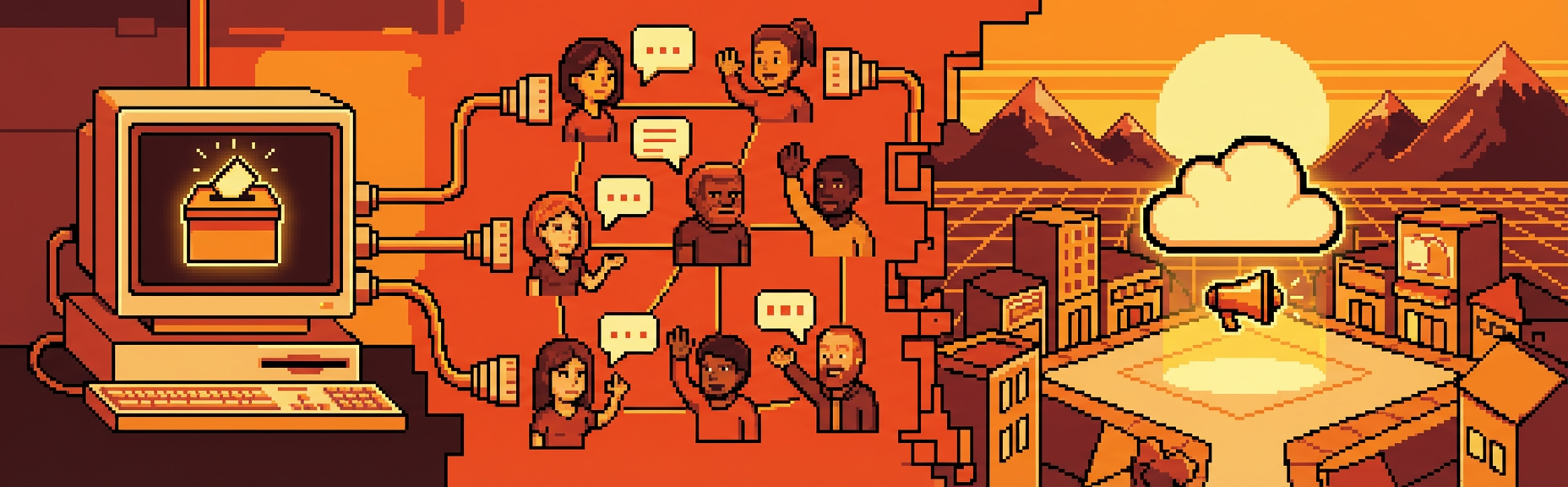
The Local Stakes: Digital democracy and online political organising

The evidence, examined carefully, tells a more specific story. The topic of digital democracy and online political organizing deserves more careful attention than the typical coverage provides, and the reason isn’t complicated once you know where to look.

The data worth focusing on isn’t the headline number but, when you look at local impact, it’s WhatsApp and Telegram groups driving local political mobilization globally. The grounded read of the situation is also the more accurate one once you examine what the evidence actually shows.

The Local Stakes: Digital democracy and online political organising

The Translation: Setting the Terms

That 72 percent of voters under 35 report social media as their primary political news source isn’t just a data point in the story of digital democracy and online political organizing. It’s the structural condition that makes everything else in this analysis make sense. Context like this doesn’t age quickly. The conditions that produced it have been building for years, and this convergence makes the current moment different from previous moments that looked similar from a distance.

WhatsApp and Telegram groups driving local political mobilization globally.

Algorithmic amplification of outrage content documented across all major platforms. The Brennan Center democracy research has been tracking this consistently.

What makes this moment worth examining carefully isn’t the novelty but the confirmation. The underlying dynamics have been visible for some time. What’s new is that they’ve reached a threshold where ignoring them requires active effort rather than simple inattention. That threshold crossing is the event, not the underlying movement that produced it.

And foreign influence operations active on X, Facebook, and TikTok ahead of every major election is part of that same picture. These elements don’t exist in separate silos. They’re reinforcing conditions in the same structural shift.

Illustration for The Local Stakes: Digital democracy and online political organising

The Local Stakes: The Analysis

Foreign influence operations active on X, Facebook, and TikTok ahead of every major election is where the analysis gets more specific. The surface reading is accessible and not wrong, but it misses the mechanism. And the mechanism is where the practical insight lives. The data worth focusing on isn’t the headline number but the mechanism: open-source tools for canvassing and voter contact are now standard in campaigns. Understanding this changes what you do with the information.

Digital fundraising is lowering barriers but increasing reliance on small-dollar micro-donors.

The skeptical counterargument deserves honest engagement. Previous moments with similar surface characteristics didn’t produce the outcomes that seemed logical at the time. That history is real. What’s different now is digital fundraising lowering barriers but increasing reliance on small-dollar micro-donors. This isn’t a minor variable, it’s the infrastructure condition that previous cycles lacked. Infrastructure changes tend to be persistent in ways that sentiment-driven changes are not. Democracy Now is one source tracking this dimension with the rigor it requires.

There’s also a distributional question that often goes unaddressed in coverage of digital democracy and online political organizing: who captures the value created by these shifts, and who absorbs the disruption costs? The aggregate picture can be positive while the distribution is uneven in ways that matter enormously to specific participants. Keeping that distributional lens in view helps you read the situation clearly rather than simply optimistically.

Implications: What This Means If You Care About Policy on the Ground

The implications of digital democracy and online political organizing extend beyond the immediate context. That 72 percent of voters under 35 report social media as their primary political news source, combined with the structural conditions described above, creates a situation where adjacent fields, decisions, and communities get affected in ways that aren’t always visible from inside the primary story. The second-order effects are frequently more important than the first-order ones, and they’re where careful attention pays the highest returns.

We need serious political analysis, not punditry.

The practical question isn’t whether to engage with these dynamics but how. The answer depends on context, on what role you occupy relative to digital democracy and online political organizing and what your actual decision horizon is. But the first step is the same regardless: accurate understanding of what’s actually happening rather than what the most available narrative says is happening.

A few concrete observations are worth separating out from the broader analysis. First, WhatsApp and Telegram groups driving local political mobilization globally isn’t a temporary condition. It’s a new baseline. Second, open-source tools for canvassing and voter contact are now standard in campaigns, which suggests that the adjustment period isn’t over. Third, and most important: the organizations and individuals who are treating the current moment as a new steady state rather than a transition are making a categorization error that will be costly to unwind later.

The Case Against: What the Critics Get Right

Intellectual honesty requires acknowledging the strongest counterarguments, not just the weakest ones. The case against the optimistic reading of digital democracy and online political organizing isn’t trivial. There are structural vulnerabilities in the current picture that deserve direct engagement rather than dismissal.

The most serious objection is the one about sustainability. Algorithmic amplification of outrage content documented across all major platforms can be read not as a foundation but as a ceiling, a point beyond which growth becomes self-limiting because of the very dynamics that produced it. If the current state has already incorporated most of the available supply of early-adopting participants, the remaining growth curve may be structurally shallower than the recent trajectory implies.

Digital fundraising is lowering barriers but increasing reliance on small-dollar micro-donors.

Looking Forward

The trajectory here is clearer than the pace. Making predictions about when specific thresholds will be crossed is genuinely difficult, and anyone claiming precision about timelines should be treated with skepticism. But the direction, toward that 72 percent of voters under 35 reporting social media as their news source and continued development of the conditions described above, is supported by the evidence in a way that doesn’t depend on a single variable going right.

Digital fundraising lowering barriers but increasing reliance on small-dollar micro-donors is the variable to watch as the leading indicator. Historical patterns suggest it moves first, with broader metrics following with some lag. This doesn’t make the outcome certain, but it makes it readable. And readability is what you need for good decisions.

Three questions are worth holding as the story develops. First: are the structural conditions that enabled the current state durable, or are they cyclical? Second: who is positioned to benefit from the next phase, and does that differ materially from who benefited in the current phase? Third: what would a clean falsification of the optimistic thesis look like, and is there any evidence of that signal emerging? These questions don’t need answers today, but having asked them changes what you notice in the months ahead.

The analysis holds up under scrutiny. That’s the only test that matters.

How is this landing where you are? Your local knowledge matters here.

Dancing with Destiny: The Rise of Longevity Tech

Hey tech adventurers, gather ’round as I share what’s been swirling in my mind lately. It’s about time we ventured into the exciting world of longevity tech, that cutting-edge domain where biology meets technology, extending not just our lifespans but our healthspans too. Imagine a future where blowing out 150 candles on your birthday cake isn’t a jaw-dropping feat but just another year of healthy living. Strap in, folks, because this isn’t sci-fi anymore. It’s happening right here, right now.

The Fountain of Youth Gets a Makeover

For centuries, humanity’s been on a relentless quest for the fountain of youth. I mean, who wouldn’t want to stay forever young? Picture this: You’re 90 years old, hiking up Mount Kilimanjaro, not for the bucket list, but because you fell in love with the view last weekend and thought, “Why not?”

Science fiction? Maybe once, but with the current trajectory of longevity tech, that scenario is rapidly skirting the edges of reality. A cocktail of advanced genetics, AI-driven drug discovery, and data analysis is unlocking new pathways to extend the human condition, pushing boundaries instead of being mere bystanders to aging.

Crunching Numbers with Style: AI to the Rescue

Okay, now let’s dig into some of the shiny tools in the longevity toolkit. Artificial Intelligence is rubbing shoulders with biology like never before, turning vast oceans of data into life-extending elixirs. Companies like Calico, backed by Google, and others are deploying AI to unearth new drugs aimed at molecular targets associated with aging processes.

Here’s a fun fact: Did you know AI can analyze millions of compounds in seconds, predicting their effects on key cellular mechanisms? Imagine doing that with a pencil and paper! (You’d end up like Rip Van Winkle when you finally finish.) By pairing machine learning algorithms with high-throughput screening, researchers are uncovering potential anti-aging compounds at breakneck speed. And while they’re at it, AI is predicting how these compounds might sidestep unwanted side effects. Talk about multitasking!

Genetics: Rewriting the Eternal Narrative

While AI is crunching data, let’s not forget our old friend, genetics. Companies such as CRISPR Therapeutics are spearheading efforts to tweak our DNA, the blueprint of life itself, to eradicate age-related diseases. If our genes dictate how we age, why not edit them for a longer, healthier life?

Gene therapy’s holy grail is turning off those pesky genes that make us old and creaky. It’s a thrilling yet cautious dance, akin to defusing a bomb with endless potential. Will these tweaks lead to unintended consequences? Maybe, but risks are part of innovation, and the payoff seems worth it.

Biohacking: Because Who Doesn’t Want to be a Cyborg?

While we await these high-tech breakthroughs, a growing crowd isn’t sitting still. Enter the biohackers, a quirky tribe of self-experimenters who believe biological identity is up for grabs. From intermittent fasting to nootropics to more edgy practices like aggressive supplementation and wearable tech, biohackers are rewriting the rules of personal health.

Dave Asprey, the self-proclaimed “father of biohacking,” claims his daily practices will help him live to 180. Now, whether that’s optimism or pure hubris, only time will tell, but it’s undeniable that biohackers are pushing the envelope on what’s possible while major companies play catch-up.

The Ethics Fazbear

Now, let’s not get too carried away. There’s a hefty snag to unravel here. Just like a pizza that’s all toppings and no crust, diving into longevity without considering the moral implications leaves us on shaky ground.

Questions are bubbling up: Who gets access to these technological wonders? How do we prevent a societal divide where only the wealthy elite can afford an extended lifespan? And perhaps the biggest conundrum of all, what do we do with all that time? These are massive philosophical questions that will tag along as our bodies march on.

Looking to the Horizon

Let’s wrap this up with some food for thought. Longevity tech is poised to redefine what it means to be human. We’re standing at the precipice of a revolution that not only reshapes our lifespans but how we choose to live our lives. Imagine communities designed for ageless living, retirement as a quaint notion from the past, and generations collaborating in unthinkable ways.

I’m excited, and just a bit apprehensive, but aren’t all great adventures a mixture of both? So keep your eyes peeled and your minds open, because we’re dancing with destiny, my friends, and it promises to be quite a performance. Who knew the future could be so now?

A New Era of Creativity: Artificial Intelligence in the Arts

Hey tech enthusiasts, creatives, and the curious minds alike! Today, we’re diving headfirst into a topic that’s bound to make traditional artists break into a cold sweat and tech enthusiasts leap for joy: the rise of Artificial Intelligence in the creative arts.

From digital art to music composition, AI is making waves across all creative disciplines, blurring the boundaries between human imagination and machine learning. So grab your favorite mug of caffeine and let’s explore how AI is changing creativity as we know it.

AI: The New Michelangelo?

Let’s set the scene: Imagine telling a Renaissance artist that in a few centuries, machines would be able to draw, paint, and compose complex symphonies. They’d probably look at you like you’d grown a second head! But here we are in the 21st century, and thanks to tools from companies like OpenAI and Google, that’s exactly what’s happening.

Artificial Intelligence is already changing digital art. Remember when AI-generated artwork sold for nearly half a million dollars at an auction? Yep, that was back in 2018, and things have only gotten wilder since. Algorithms like GANs (Generative Adversarial Networks) can now create visual art that’s sometimes impossible to tell apart from human-created pieces.

It’s not just about recreating what exists. AI is also pushing boundaries in artistic styles. From reimagining classical art with modern twists to generating completely new styles, the possibilities are endless. And honestly, if you thought everyone’s going digital, how about machines making friends through art?

Music to Machines’ Ears

If AI can create compelling art, what about music? Well, brace yourselves, because AI music composition isn’t just a concept anymore. It’s real. Tools like AIVA (Artificial Intelligence Virtual Artist) are already composing symphonies. AIVA’s compositions have been used in video games, advertisements, and even movie scores.

And while AI isn’t putting Beethoven out of a job (his is long secure, considering he’s been dead for centuries), it’s opening new doors for composers to explore. Musicians can now experiment with AI-generated melodies to find inspiration, creating musical blends that might have been impossible otherwise.

This raises philosophical questions, too: If a machine can create an emotionally stirring piece of music, what does that say about the nature of art itself? But that’s a rabbit hole for another day!

The AI/Artist Collaboration

Now, here’s where things get interesting: collaboration. Whether you’re a writer, filmmaker, or designer, AI tools are becoming creative partners. Adobe, for example, has integrated AI-powered features into its creative software, giving creators tools like auto-generating color palettes and suggesting design elements based on user behavior.

In screenwriting, AI tools can help by generating character ideas or plot outcomes based on input parameters. Here’s the thing though: AI isn’t replacing human creativity, it’s boosting it. These tools are more like an extension of the artist’s toolkit.

Artists can focus more on the creative process while letting AI handle the mundane, repetitive tasks. It’s like having a really clever intern who doesn’t need coffee breaks or sleep!

Challenges on this Tech Renaissance

It wouldn’t be a tech breakthrough discussion if we didn’t talk about the messy parts, right? The rise of AI in arts has plenty of controversies. Issues like copyright infringement and questions about who owns AI-generated work are heating up debates. Who gets the credit: the algorithm, the programmer, or the user?

Then there’s the worry about stifling human creativity. Critics fear that over-reliance on AI could lead to a homogenization of art, losing the unpredictability and weird quirks of human-made pieces. But just like the invention of photography didn’t kill painting, we can guess that AI might just become another chapter in how creative expression evolves.

The Future? It’s Yours to Create

As we look ahead, I can picture an era where AI and creativity work together naturally. Predicting what’s next is always a gamble, but it’s possible to see AI thriving alongside human imagination, driving new art forms and expressions we haven’t even dreamed of yet. Who knows? Maybe your next favorite artist will have a microchip for a brain!

Embrace this era of tech-driven creativity. Whether you’re an artsy type who’s skeptical of machine-made designs or a tech nerd excited about giving AI a paintbrush, what’s coming next for creativity with AI is wide open and full of possibilities. Keep your eyes peeled, stay curious, and maybe, just maybe, pick up a brush with silicon bristles yourself.

Embracing Harmony: AI in the Creative Arts

Howdy tech aficionados! Grab your favorite nerdy mug filled with steaming coffee because today we’re diving into the beautifully chaotic intersection of Artificial Intelligence and the Creative Arts. As someone who has spent weekends with sketchpads and code editors side by side, I’m bubbling with excitement to share the latest breakthroughs, and let me tell you, it’s quite a masterpiece.

Welcome to the AI Renaissance, folks. We’re watching a fusion where computers aren’t just crunching numbers and running algorithms, they’re composing symphonies, generating colorful paintings, and writing novels worthy of a cozy corner in your local bookshop.

The Birth of AI: A Little Context

Before I get carried away by the romance of AI Picasso singing lullabies, let’s take a quick rewind and talk about how we got here. Decades ago, machine learning and neural networks were buzzwords reserved for academic papers and sci-fi fanatics. But fast forward to today, and we’re talking about AI tools like OpenAI’s GPT working alongside human creatives, co-authoring everything from interactive stories to film scripts.

It all started with algorithms learning patterns, recognizing shapes, and, ultimately, crafting novelties. Today, what once felt like black boxes of mystery have become powerful creators in their own right. They fit right into your creative toolkit, like any trusty paintbrush or musical instrument, offering new forms of expression.

Innovating the Brushstroke: AI in Visual Arts

First on our creative tour is the captivating world of visual arts. AI technologies like DeepArt and RunwayML are making waves by creating and augmenting impressive works of art. These tools analyze artistic styles, picture Van Gogh, Monet, or even street graffiti, and enable you to infuse those styles into your own images or generate something entirely unique.

In moments of procrastination-induced creativity, I found myself uploading a picture of my morning espresso to an AI style-transferring app. What I received was not just a coffee cup but a swirling, colorful masterpiece echoing the strokes of an imaginary caffeinated Van Gogh.

But beyond aesthetic fun, AI is finding its home within professional environments. Artists are now collaborating with AI to expand their creative horizons and tackle projects that would have been previously unimaginable due to time constraints or sheer complexity.

Harmony in Harmony: AI’s Symphonic Evolution

Let’s talk music! If you’ve ever hummed a tune only to have no idea how to finish it, fear not. AI composers are here to join your garage band. Tools like AIVA (Artificial Intelligence Virtual Artist) are composing symphonies, orchestrating melodies, and even creating genre-spanning pieces that defy musical norms.

It’s the partnership between human and machine composers that’s truly exhilarating. Imagine your favorite musician teaming up with an AI to experiment with new styles, all the while challenging the boundaries of what music can be. One personal experiment with MuseNet, a project from OpenAI, had me spinning variations of Beethoven mashed with lo-fi beats my teenage self would have adored.

Think about it: we’re on the brink of accessing infinite creative palettes, where you drive the creativity, and your AI co-composer helps color outside the lines.

Enter the Stage: AI Writers & Narrators

If you’re a voracious reader like me, the prospect of AI influencing the literary world is incredibly tantalizing. Let’s explore how AI has made its way into storytelling.

At the forefront, GPT-3 (you’ve probably heard of it, it’s like the rockstar of AI language models) assists writers with expanding narratives, creating dialogue, and even crafting entire story arcs. The results are not your average cookie-cutter genre fiction but intriguing tales born from human-machine partnerships.

Now, I’ll admit, there’s a hint of skepticism here. AI still doesn’t fully grasp how to pinch my heart like Shakespeare or Roald Dahl might, but we’re inching closer. Startups like Sudowrite are playing the long game, helping writers clear writer’s block, brainstorm plot twists, and ultimately, elevate human creativity.

Muse or Machine: The Philosophical Pendulum

Of course, this brings us to the philosophical side of things, where the pendulum swings between awe and apprehension.

Could we face a future where machines outperform human ingenuity? Personally, I see AI as a muse rather than a replacement for the human spark. The soul of art lies in human experience, our battles, joys, heartbreaks, and AI is our imaginative sidekick on this creative journey.

And while there’s spirited discourse surrounding AI’s potential impact on creative jobs and authorship rights, many believe the ultimate melody will be a symphonic partnership. AI augmenting rather than supplanting human creativity.

Looking Ahead: The Next Verse

As we look into the future, the prospect of AI-driven creative fields is endless. Imagine a world where VR spaces generated by AI designers allow us to immerse in living, breathing art galleries or interactive storytelling experiences in which AI adjusts narratives on-the-fly according to audience engagement.

So, dear reader, brush off your creative hats and revel in this artistic revolution. As we continue to paint the canvas of the future, AI stands beside us, a collaborative companion in the pursuit of beauty and innovation.

Stay curious, stay creative, and let’s together transcend the conventional boundaries of art, one algorithm at a time. Cheers!