The Invisible Revolution in Constitutional Law
Most Americans understand the Supreme Court through its landmark decisions. Brown v. Board, Roe v. Wade, Citizens United. These cases arrive with oral arguments, detailed briefs, and lengthy opinions that legal scholars dissect for decades. But increasingly, the Court’s most important work happens in the shadows, through unsigned orders issued without argument or explanation. This “shadow docket” has quietly become the primary way the current Court reshapes American law.
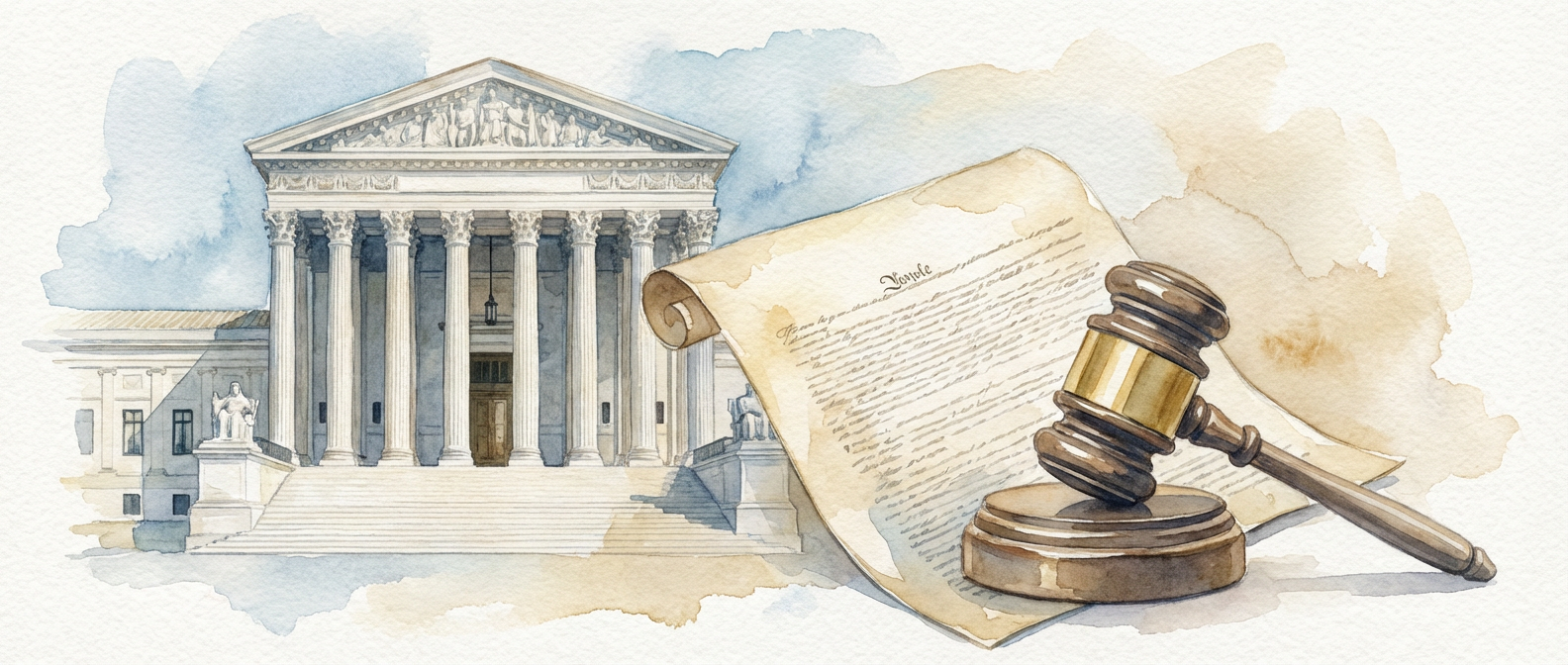
The term itself, coined by legal scholar William Baude, captures something disturbing about this practice. Unlike the traditional merits docket, shadow docket orders emerge suddenly, often late at night, with minimal reasoning. They address emergency applications, stays of lower court rulings, and injunctions that can affect millions of Americans immediately. What began as a tool for genuine emergencies has become a parallel judicial system operating with far less transparency and accountability.
Look at the numbers. During the first three years of the Trump administration, the government filed emergency applications to the Court at nearly ten times the rate of any previous administration. The Court granted these applications at an unprecedented rate, often overturning lower court decisions that had blocked controversial policies. This pattern has continued, suggesting we’re witnessing a fundamental shift in how constitutional law develops, not just a temporary deviation.
The Constitutional Mechanics of Emergency Relief
To understand why this matters, we need to examine what emergency relief traditionally required. The Court developed a clear four-factor test: the applicant must show they’ll likely succeed on the merits, suffer irreparable harm without relief, that the balance of equities favors intervention, and that relief serves the public interest. These factors were meant to create a high bar, ensuring emergency orders remained truly exceptional.
But recent shadow docket decisions suggest these standards have eroded dramatically. Take the Court’s 2021 decision allowing Texas’s abortion ban to take effect despite clear conflicts with existing precedent. The majority offered no explanation for how the four factors were satisfied. They simply noted that the challengers had made “serious questions” about the law’s constitutionality while allowing it to operate anyway. This reasoning inverts traditional emergency relief standards, which typically require clear legal violations before intervention.
The procedural differences matter enormously for legal development. When the Court issues a full opinion, lower courts receive detailed guidance about how to apply constitutional principles to similar cases. Shadow docket orders provide no such guidance. Federal judges across the country must guess at the Court’s reasoning, leading to inconsistent applications and further litigation. This opacity undermines one of the judiciary’s core functions: providing predictable legal frameworks for democratic governance.
The Democratic Accountability Problem
The shadow docket’s most troubling feature isn’t procedural but democratic. Supreme Court justices serve for life precisely because they’re expected to base decisions on legal reasoning rather than political pressure. But this independence comes with a crucial trade-off: their power must be exercised transparently, with detailed justifications that allow democratic oversight and scholarly critique.
Shadow docket orders break this democratic bargain. When justices issue important rulings without explanation, they exercise enormous power while avoiding accountability. Legal scholars can’t meaningfully analyze unsigned orders with no reasoning. Law schools can’t teach students how to understand or predict such decisions. Most importantly, the public can’t evaluate whether constitutional law is being developed according to legal principles or political preferences.
This accountability deficit becomes particularly acute when shadow docket orders effectively reverse lower court decisions that followed existing Supreme Court precedent. If five justices believe established precedent should change, the democratic solution is to grant certiorari, hear full arguments, and issue a reasoned opinion explaining the change. Using the shadow docket to achieve the same result shortcuts the democratic processes that legitimate judicial power in a constitutional democracy.
The False Emergency Doctrine
Defenders of expanded shadow docket use argue that modern litigation’s pace requires more flexible emergency procedures. Complex policy challenges, they contend, can’t wait for the traditional Supreme Court calendar, which may take years to resolve circuit splits or constitutional questions. This argument has superficial appeal but rests on a fundamental misunderstanding of judicial emergency power.
True emergencies in constitutional law are rare and easily identifiable. Military operations during wartime, immediate threats to public safety, or cases where delay would render eventual relief meaningless might justify expedited procedures. But most recent shadow docket cases involve ordinary policy disputes where the “emergency” is simply that the applicant dislikes a lower court’s decision.
The Supreme Court itself created this false urgency problem by encouraging litigants to seek emergency relief as a routine litigation strategy. When the Court regularly grants such applications, rational actors will file them more frequently, creating an artificial cycle of emergency applications that justify further procedural shortcuts. Breaking this cycle requires the Court to return to genuinely restrictive emergency relief standards, not expand them further.
Reclaiming Judicial Transparency
The solution isn’t eliminating emergency procedures entirely but returning them to their proper constitutional role. The Court should require detailed justifications for all shadow docket orders that effectively reverse lower court decisions or establish new legal principles. When emergency relief requires changing established precedent, the Court should expedite full briefing and argument rather than issuing unexplained orders.
More fundamentally, we need public recognition that procedural transparency isn’t mere formalism but essential to judicial legitimacy in democratic systems. Courts derive their authority not from political appointment but from their commitment to reasoned decision-making according to legal principles. When that commitment becomes optional, depending on which procedural track a case follows, judicial power begins resembling political power exercised by unelected officials.
The current trajectory threatens to transform the Supreme Court from a legal institution into something approaching a super-legislature, making policy through opaque emergency orders rather than transparent legal reasoning. Whether this development can be reversed may determine not just how constitutional law develops but whether judicial institutions can maintain democratic legitimacy in an increasingly polarized political environment. The stakes demand serious engagement with these procedural questions that too often get dismissed as technical legal details rather than fundamental issues of democratic governance.