The Deceptive Simplicity of Recognition
When Taiwan’s foreign minister visits Guatemala or when the United States refuses to recognize the Taliban government in Afghanistan, these actions might seem like mere diplomatic theater. But here’s the thing: diplomatic recognition is the fundamental currency of international legitimacy. It determines everything from trade agreements to military cooperation to basic consular services for citizens abroad.
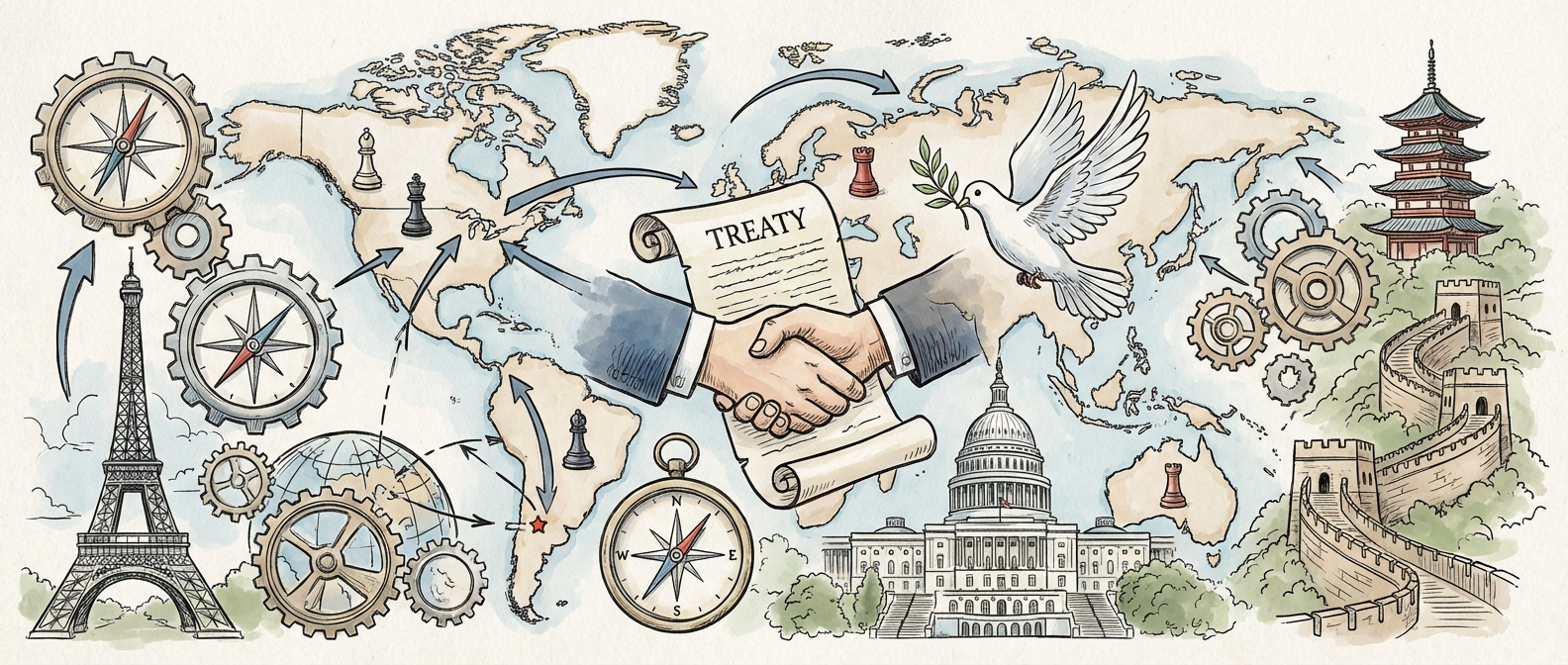
Recognition comes in several flavors, each with different consequences. De jure recognition gives you full legal status under international law. De facto recognition acknowledges you control territory without saying you’re legitimate. Conditional recognition puts strings attached. Each type creates different obligations and opportunities for both sides.
What makes this messy is that recognition isn’t an on-off switch. States can trade with you without having diplomatic relations. They can send humanitarian aid while refusing to endorse you politically. They might work with you in international forums but refuse one-on-one meetings. International relations rarely offer clean choices between friendship and hostility.

The Legal Architecture of International Standing
The 1933 Montevideo Convention set four criteria for statehood: permanent population, defined territory, government, and capacity to enter relations with other states. Sounds straightforward, right? Wrong. These “objective” standards turn out to be incredibly subjective in practice. Kosovo checks all the boxes but roughly half of UN member states still don’t recognize it. Palestine has observer status at the United Nations while lacking full territorial control.
Recognition unlocks a whole toolkit of legal benefits under international law. Recognized states can take disputes to the International Court of Justice, sign binding treaties, and claim sovereign immunity in foreign courts. Their diplomats get protection under the Vienna Convention. Their citizens receive passports that work worldwide. No wonder aspiring states spend fortunes on recognition campaigns.
But there’s a catch. Once you recognize someone, backing out becomes diplomatically expensive. You’ve essentially bet your credibility on their continued legitimacy. This explains why countries agonize over recognition decisions and hate reversing them even when things go sideways.
Economic and Strategic Calculations
Recognition decisions mix moral principles, economic interests, and strategic goals in complicated ways. When President Truman recognized Israel in 1948, he juggled domestic politics, Cold War dynamics, and post-Holocaust humanitarian concerns. Every major recognition decision involves similar multi-layered calculations.
Money talks loudly in these decisions. Taiwan’s diplomatic allies often mention development assistance and investment opportunities as key factors. China’s Belt and Road Initiative has convinced several nations to flip from recognizing Taipei to Beijing. When billions in trade hang in the balance, pragmatism often beats ideology.
Strategic considerations complicate things further. The US maintains robust unofficial relations with Taiwan while officially accepting Beijing’s One China policy. This balancing act preserves flexibility while managing competing commitments. Smart diplomacy can navigate seemingly impossible positions through creative ambiguity and careful boundary-setting.
The Domino Effects of Recognition Choices
Individual recognition decisions ripple through the entire international system. When Russia recognized South Ossetia and Abkhazia after the 2008 Georgia conflict, it signaled willingness to challenge Western ideas about territorial integrity. This precedent made later responses to Crimea’s annexation more complicated and feeds into current tensions over Ukraine.
Regional powers often coordinate their recognition policies for maximum impact. The African Union’s collective rejection of governments that seize power unconstitutionally has helped establish important democratic precedents. European Union coordination on recognition amplifies individual member influence and promotes shared values.
The explosion of international organizations has created new battlegrounds for recognition fights. Competition for membership in regional bodies, specialized agencies, and informal groups reflects ongoing legitimacy struggles. Success in these forums can provide back-door routes to international standing when traditional bilateral recognition proves impossible.
Modern Challenges and Future Implications
Digital technology is scrambling traditional recognition frameworks. Cyber capabilities let non-state actors project power across borders without controlling territory. Cryptocurrency enables economic transactions that bypass state-controlled financial systems. These changes challenge basic assumptions about what effective government and sovereign capacity mean today.
Climate change may force us to rethink recognition criteria entirely. Rising sea levels threaten several small island states’ territorial foundations. If Tuvalu becomes uninhabitable, does it stop being a state? Can governments operate in exile indefinitely while keeping international legal standing? Current international law doesn’t have clear answers.
The growing clout of non-state actors adds another wrinkle. Multinational corporations, international NGOs, and transnational networks wield quasi-sovereign authority in specific areas. They can’t claim statehood, but their practical influence often exceeds that of recognized governments. Future diplomatic frameworks may need to accommodate more diverse forms of international authority.
Understanding these dynamics matters for anyone trying to make sense of our interconnected world. The next time you read about a recognition dispute, think about the complex calculations involved and the wide-ranging consequences at stake. These seemingly technical diplomatic decisions shape the international order we all live in. They deserve our attention.